














From the Mundane to the Marvelous
In many cities around the world, commuting by subway is associated with daily routine, grey corridors, and bustling crowds. In Stockholm, it’s a different story. The Swedish capital provides a unique artistic experience, thanks to its exceptional metro stations and the artists who infused them with distinct character.
Historical Roots of Stockholm’s Metro
The evolution of Stockholm’s metro, commonly known as Tunnelbana, began in the 1940s, with the first line opening in 1950. From its inception, the Stockholm metro was envisioned not just as a mode of transportation but also as an avenue for art and culture. Today, spanning over the blue, green, and red lines, the metro covers a vast network of stations, each telling its unique story. The intertwining of art and architecture in the metro’s design was a revolutionary concept. The artists’ collaboration was not just about decorating the stations; it was about transforming mundane daily commutes into a unique cultural and visual experience, turning the Stockholm metro into a world-renowned underground art gallery.
T-Centralen: A Heartbeat of Artistic Flair
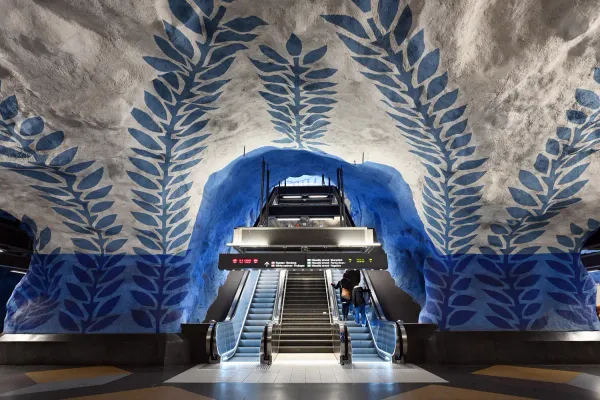
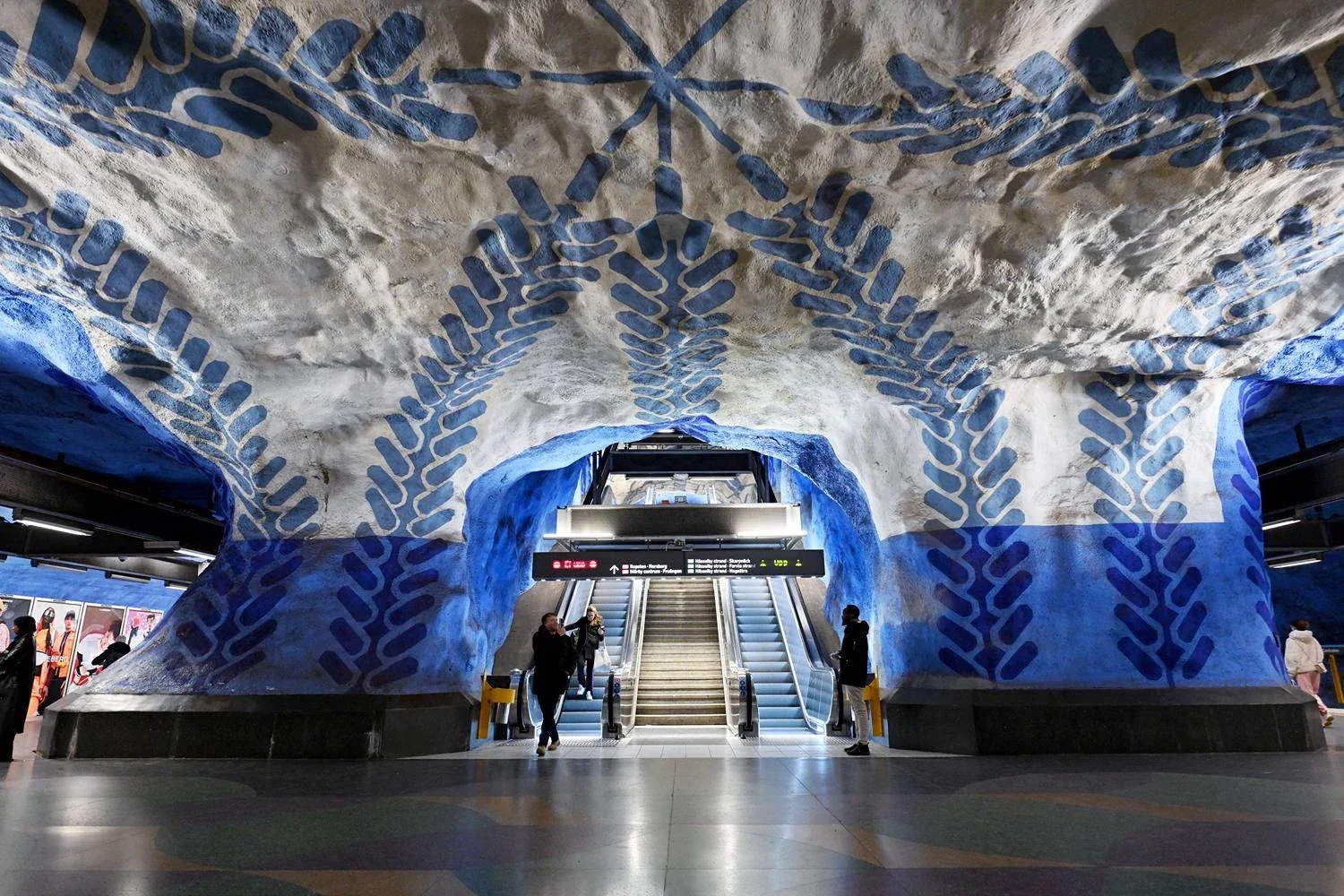
The T-Centralen station, the hub of Stockholm’s metro system, draws attention due to the murals by Per Olof Ultvedt. In 1957, he designed the blue and white leafy creepers that climb the station walls, making passengers feel like they’re in the midst of a lush, subterranean garden. These murals, characterized by Ultvedt’s signature combination of sophisticated design and Scandinavian simplicity, are just the beginning. Look up at the escalator’s zenith, and you’ll see silhouettes of the workers who built the station, a tribute by Ultvedt to those who carved out these remarkable spaces.
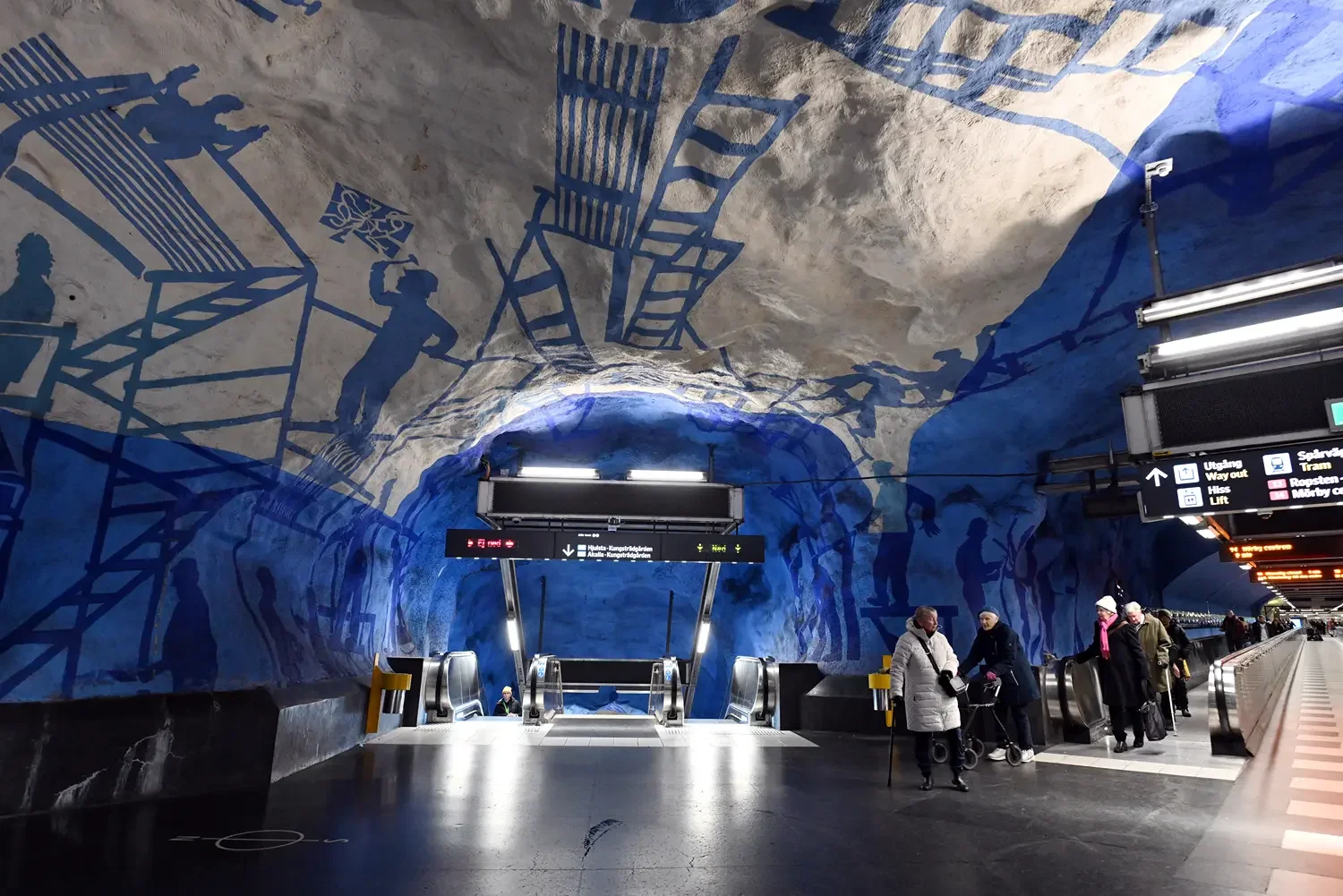
T-Centralen Station. Photo: Kamila Mankiewicz

Stadion Station. Photo: Kamila Mankiewicz
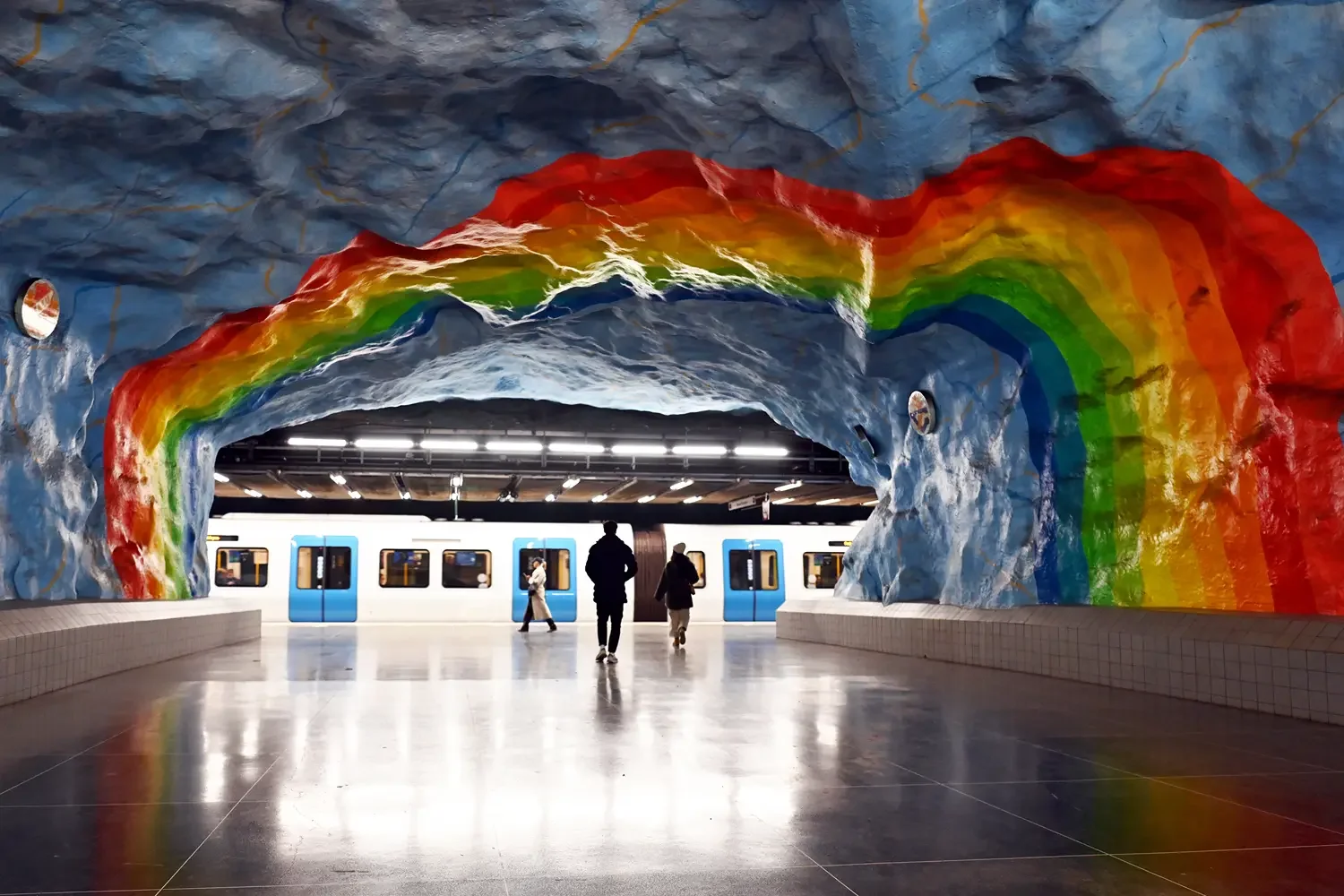
Athletic Echoes at Stadion Station
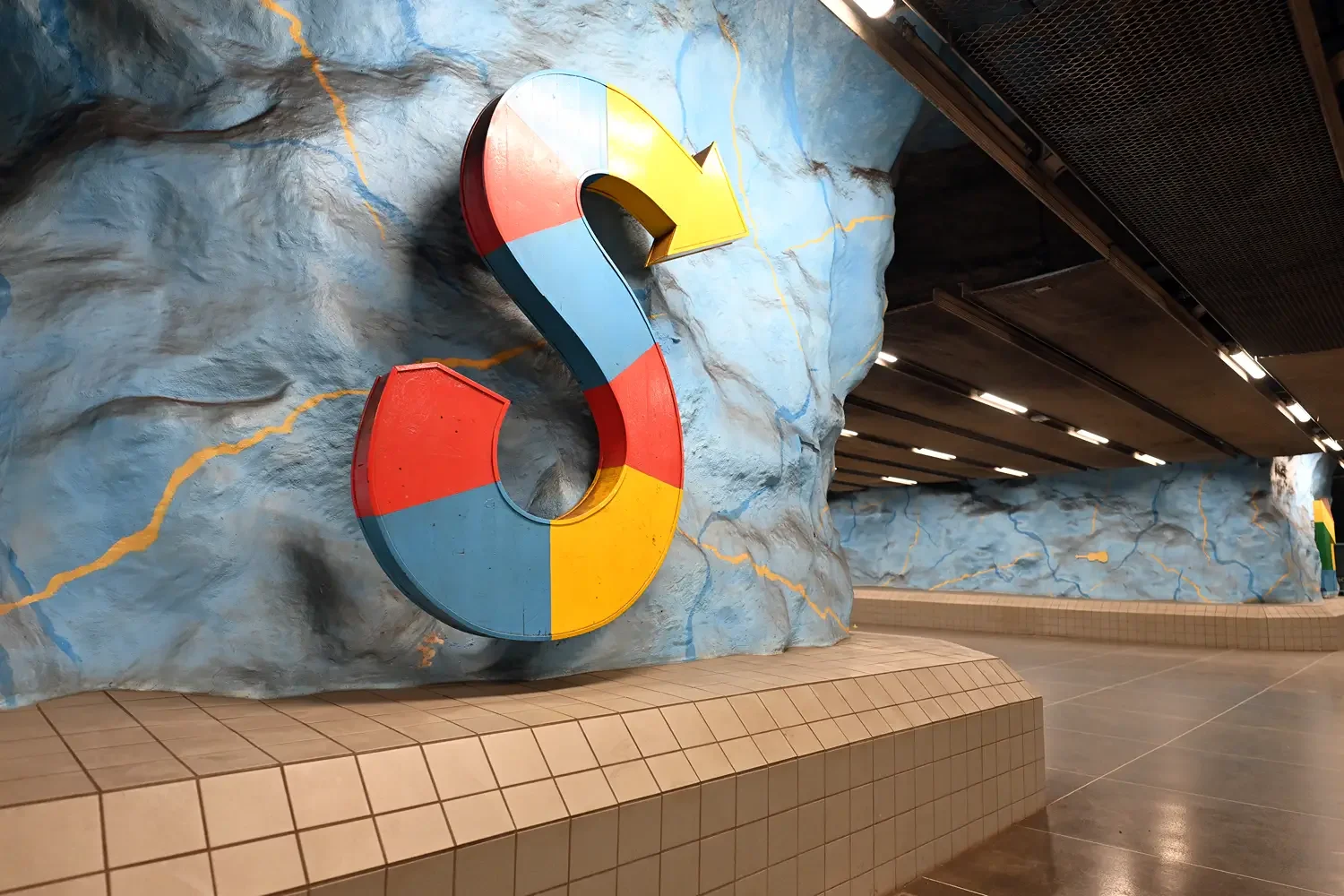
Nearby, Stadion Station welcomes visitors with whimsical colorful rainbows. Opened in 1973, the station pays tribute to the 1912 Summer Olympics. The rainbow arches, designed by Enno Hallek and Åke Pallarp, echo the harmony between motion and tranquility while saluting the Olympic and athletic spirit of the location. I was greeted by these murals during my most significant sports event, the Stockholm Marathon, which I began and finished at this very station for the past three years.
Science and Art Merge at Tekniska Högskolan
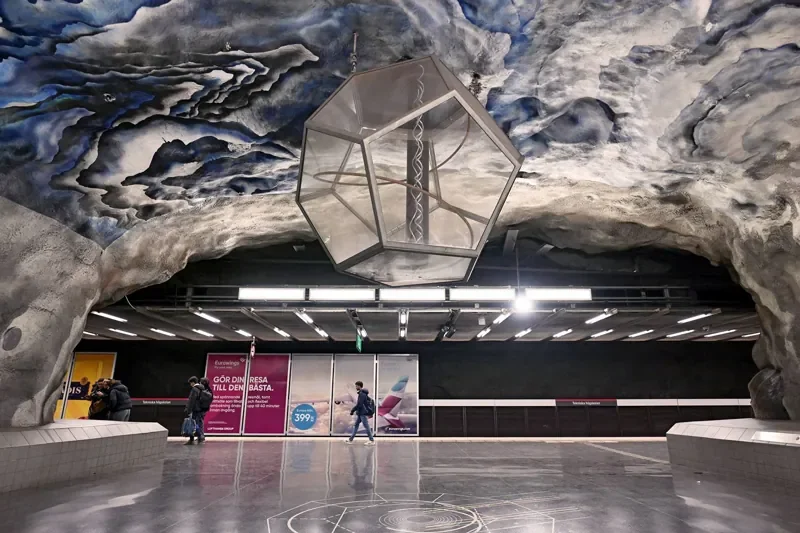
One stop from Stadion, Tekniska Högskolan station awaits. The walls are adorned with symbols representing various fields of study, from mathematics to astronomy. The station’s design, by Lennart Mörk, captures the essence of progress and innovation, illustrating how science and art can complement one another. His inspiration came from the nearby technical university (Kungliga Tekniska högskolan) and Sweden’s technological advancements.
Östermalmstorg: A Station of Symbols and Reflections
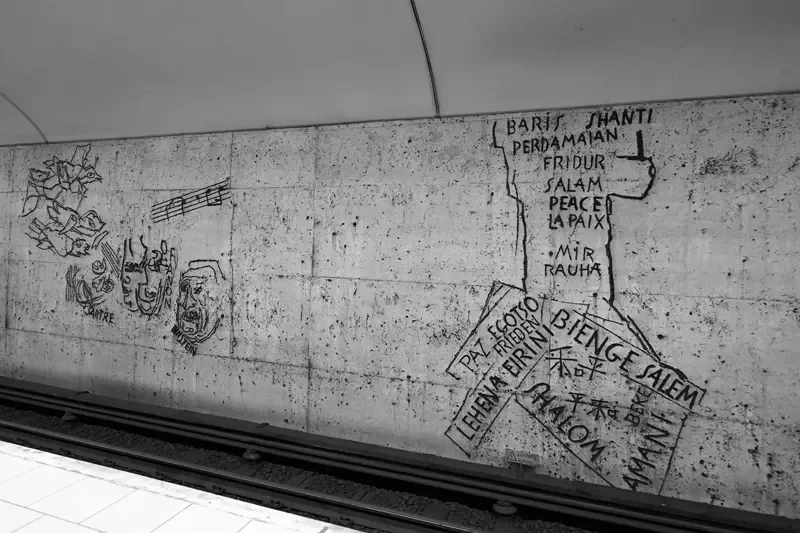
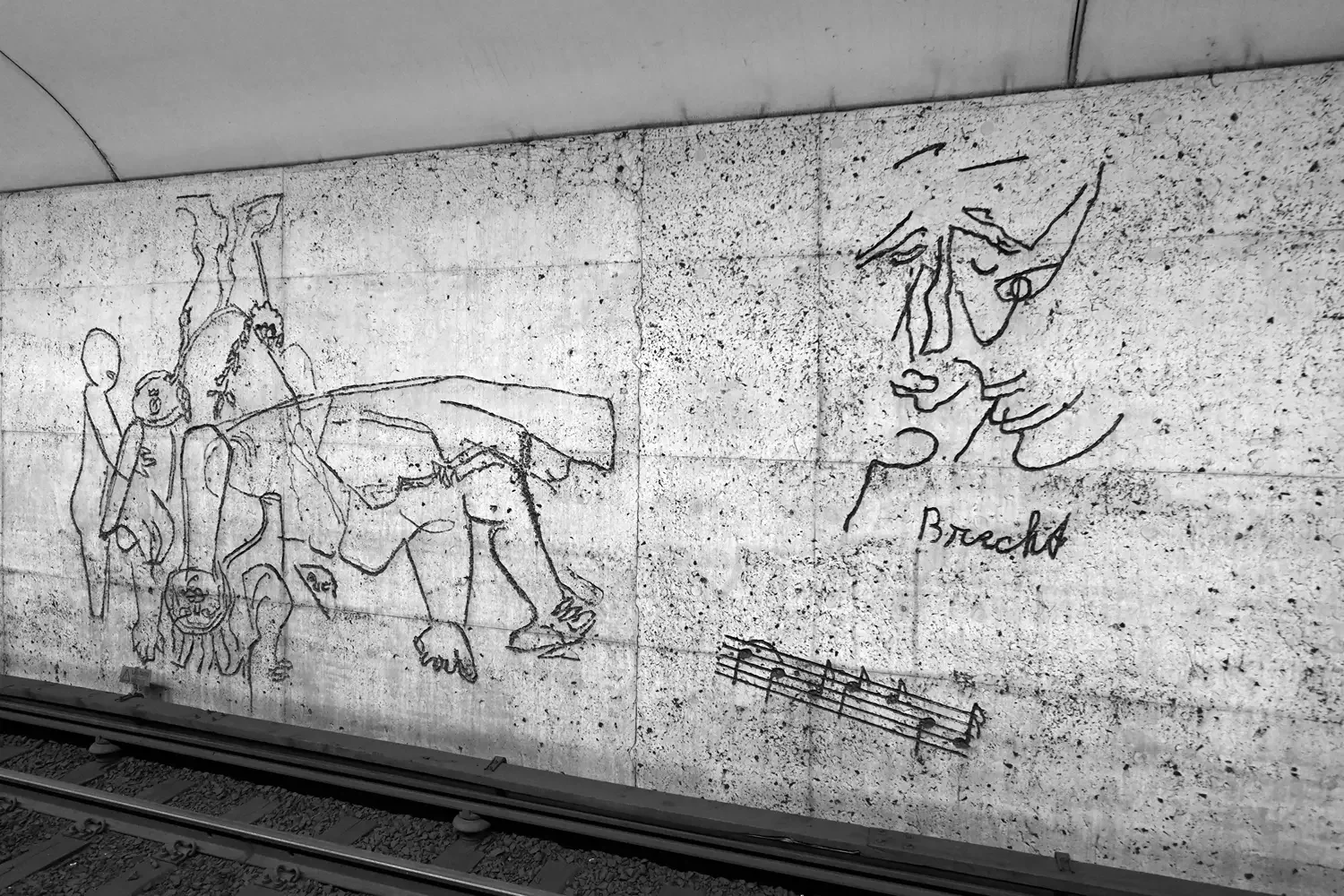
Continuing towards the city center on the red metro line after leaving Tekniska Högskolan station, we pass by Stadion station, soon arriving at Östermalmstorg. This unique station was inaugurated in May 1965. While Östermalmstorg might not ring a bell for some, it stands out as one of the most controversial spots in the metro network due to its distinctive artistic embellishments. The station’s design was masterminded by the artist Siri Derkert. Her work, titled “Ristningar i betong” (Engravings in Concrete), revolves around themes such as women’s emancipation, peace movements, and environmental concerns. These drawings and messages have been etched into the station’s concrete walls. Silhouettes of figures like Simone de Beauvoir, Albert Einstein, and Jean-Paul Sartre grace the surfaces. Alongside them, passengers might also recognize the musical notes to “Internationalen” (The Internationale) and “Marseljäsen” (The Marseillaise), as well as the international peace symbol on the station’s floor. With this, Östermalmstorg isn’t just another metro stop but a space filled with symbols and reflections for passengers to admire while they wait.
Nature’s Palette at Solna Centrum
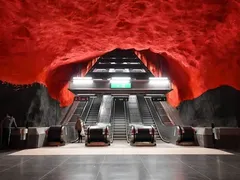
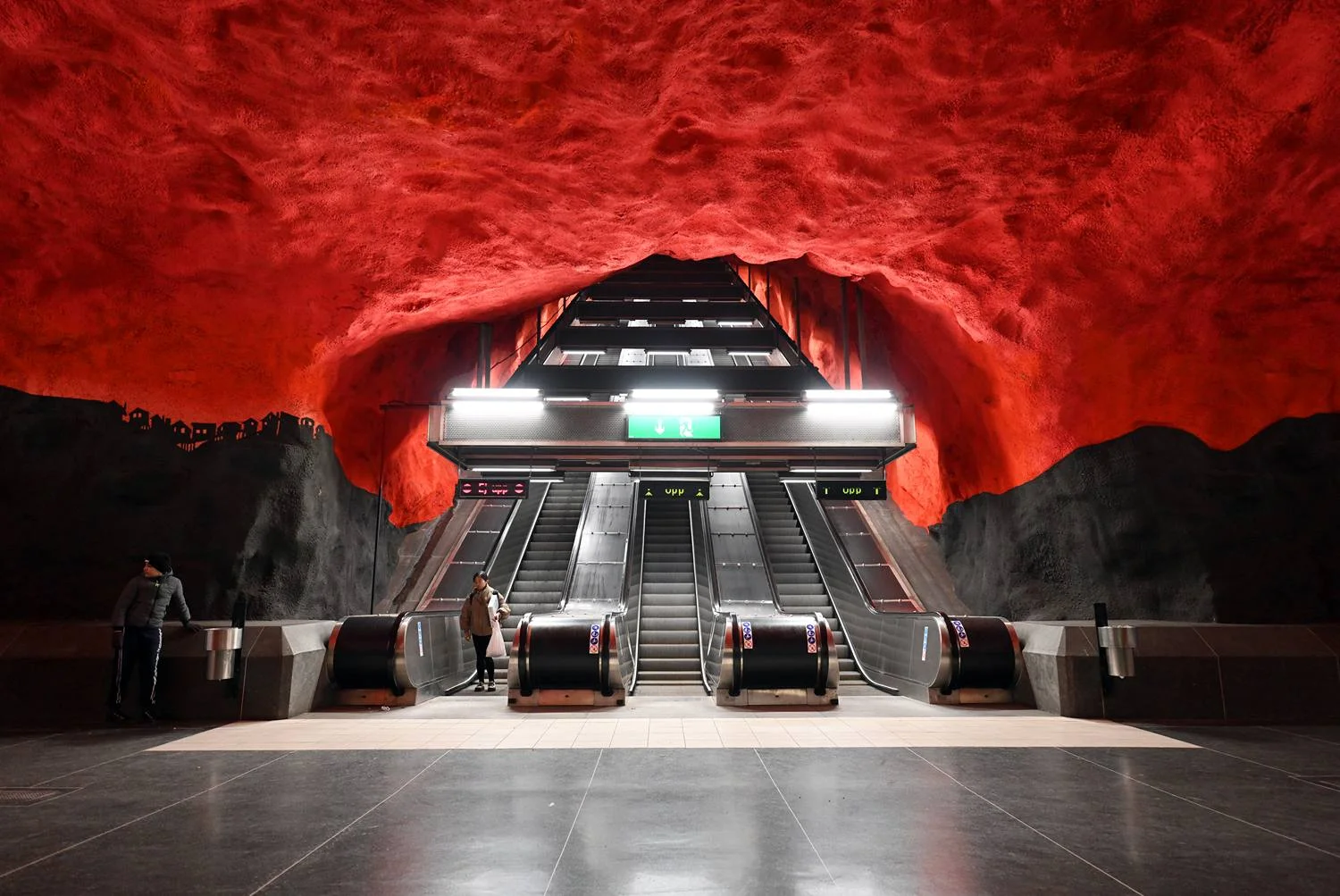
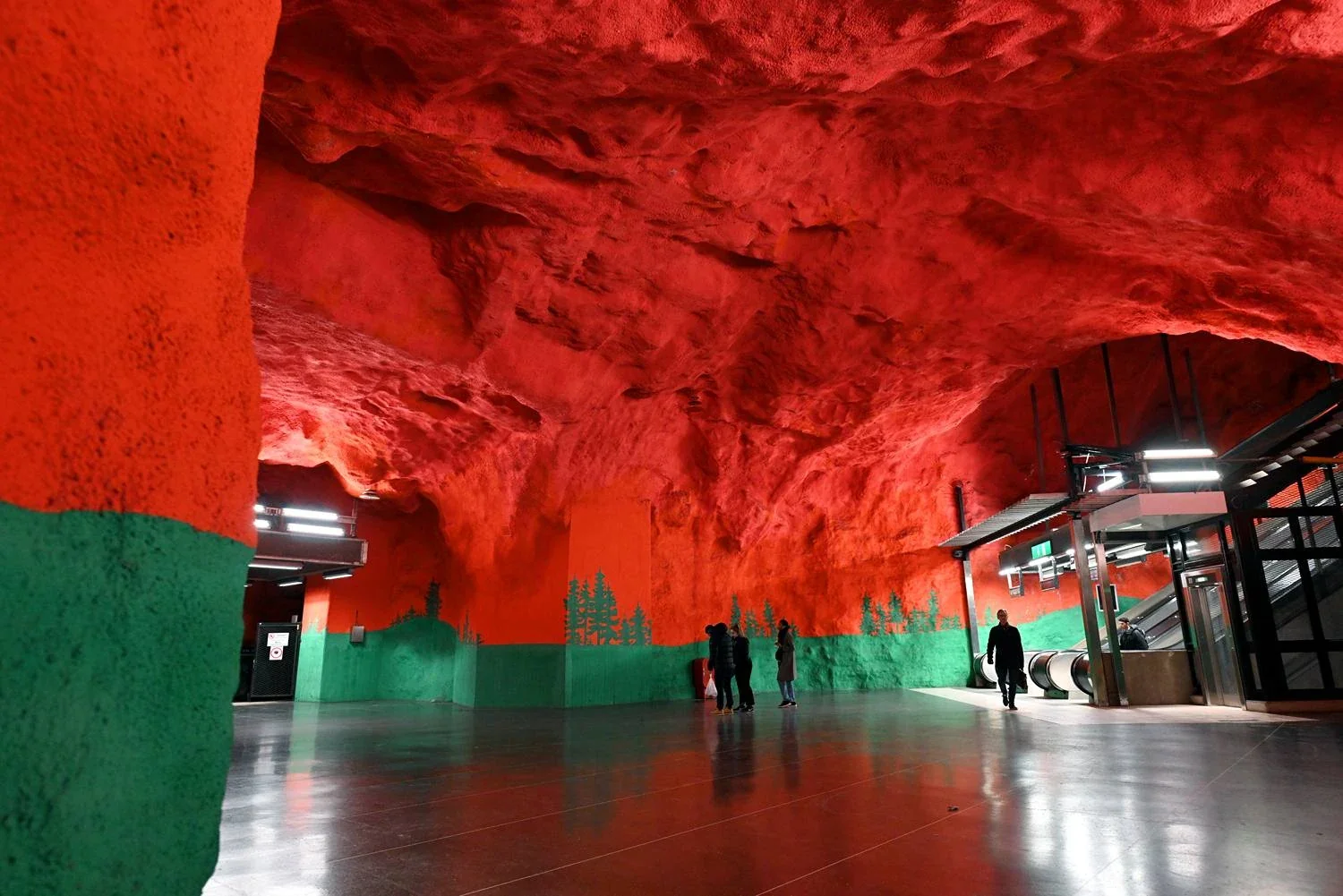
One of the most visually arresting stations is Solna Centrum, which surprises with its palette of colors. Opened in 1975 and crafted by artists Karl-Olov Björk and Anders Åberg, the station’s red-black color palette speaks volumes about ecological concerns, particularly deforestation. Standing on platforms carved from rock and surrounded by these crimson-black hues, it’s an experience hard to forget.
Journey to the Depths: Västra Skogen and Huvudsta
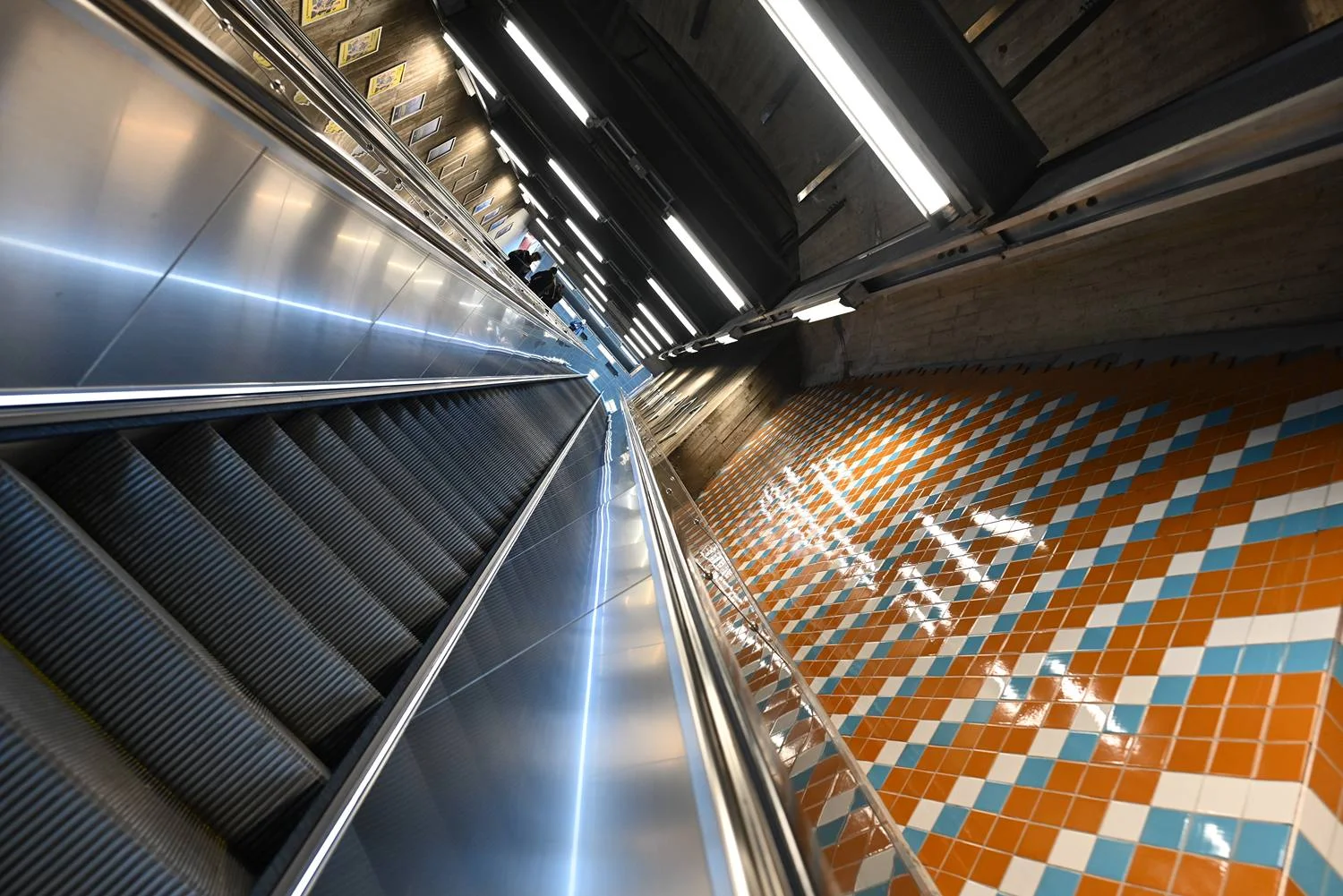
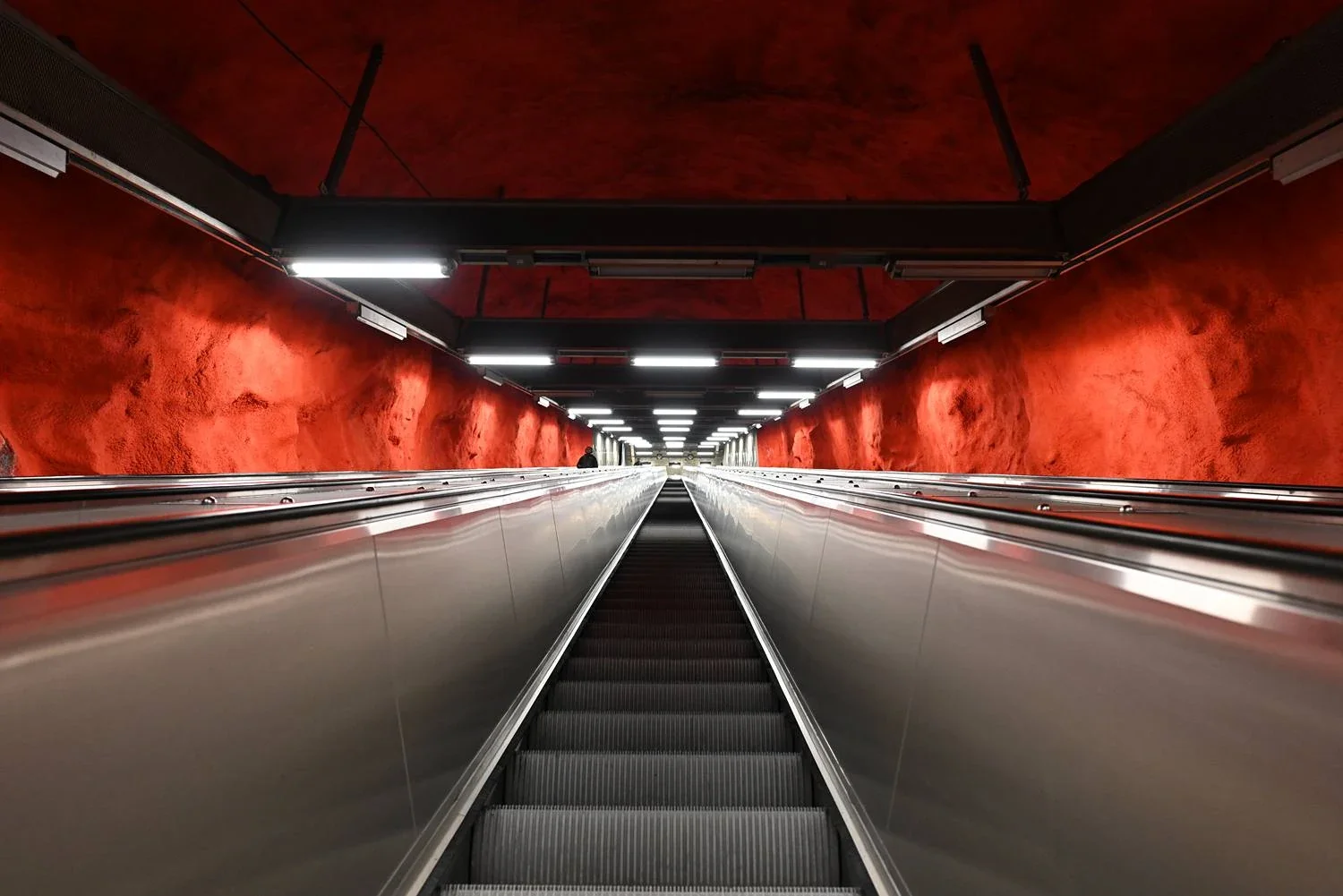
On the same metro line, we arrive at Västra Skogen. Introduced in 1985, these escalators ferry passengers deep underground with their impressive length and depth. Not only do they highlight Swedish engineering feats, but they also underscore Stockholm’s intricate metro system, much of which is carved into rocks at depths exceeding 30 meters.
Kaleidoscope of Cultures at Västra Skogen and Huvudsta
As you traverse Västra Skogen, you’ll instantly notice the rich mosaics decorating its walls and ceilings. Thanks to the work of Siri Derkert, these colorful depictions serve as narratives, transporting passengers around the world, showcasing Stockholm’s cultural diversity. Huvudsta station, although nearby, possesses its unique charm. Walls adorned with frescoes depict the social and cultural dynamism of Stockholm. Elis Eriksson’s work here showcases the daily life of city dwellers, encapsulating their joys, concerns, dreams, and routines. Together with the mosaics in Västra Skogen, the frescoes in Huvudsta paint a vibrant picture of Sweden’s capital.
Solna Station. Photo: K. Mankiewicz, Photographer Stockholm.
Unity in Color at Tensta
Conceived by Helga Henschen and Lars Erik Falk, Tensta Station is a true urban masterpiece. Henschen, not just an artist but a social activist, crafted a visual ode to unity and solidarity. Her murals portray people from different backgrounds, symbolizing cultural diversity and a quest for global understanding.
Nature’s Architectural Marvel at Rådhuset
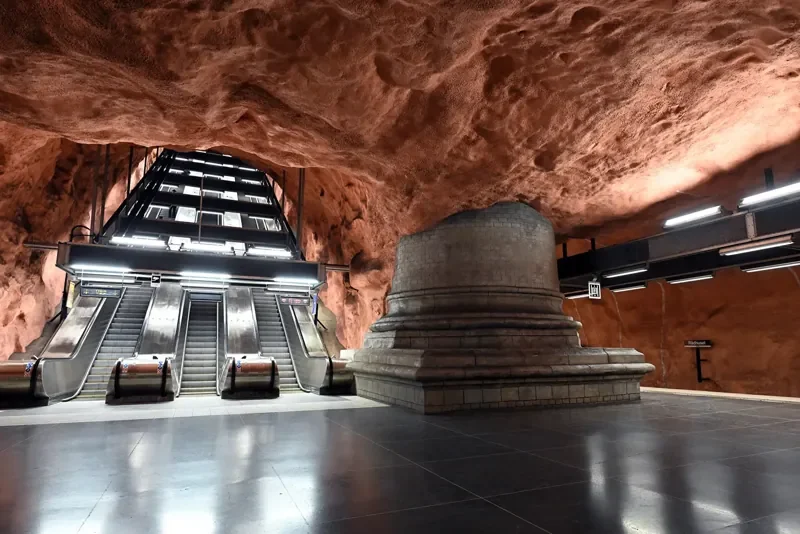
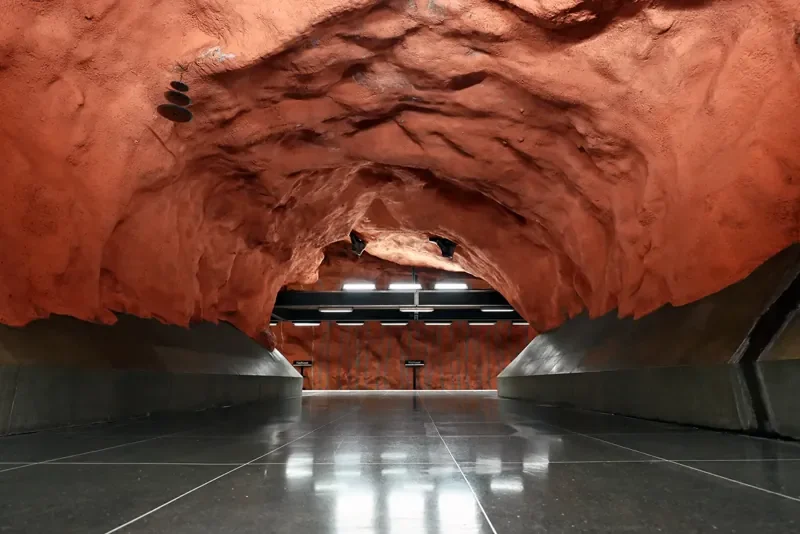
Venturing back on the same metro line towards the city center, Rådhuset Station is a must-see. Designed by Sigvard Olsson, it’s not just its artistry that astounds, but also its natural charm. Resembling canyon landscapes, the station showcases the elegance typical of Scandinavian design.
The Artistic Vision of Odenplan Station
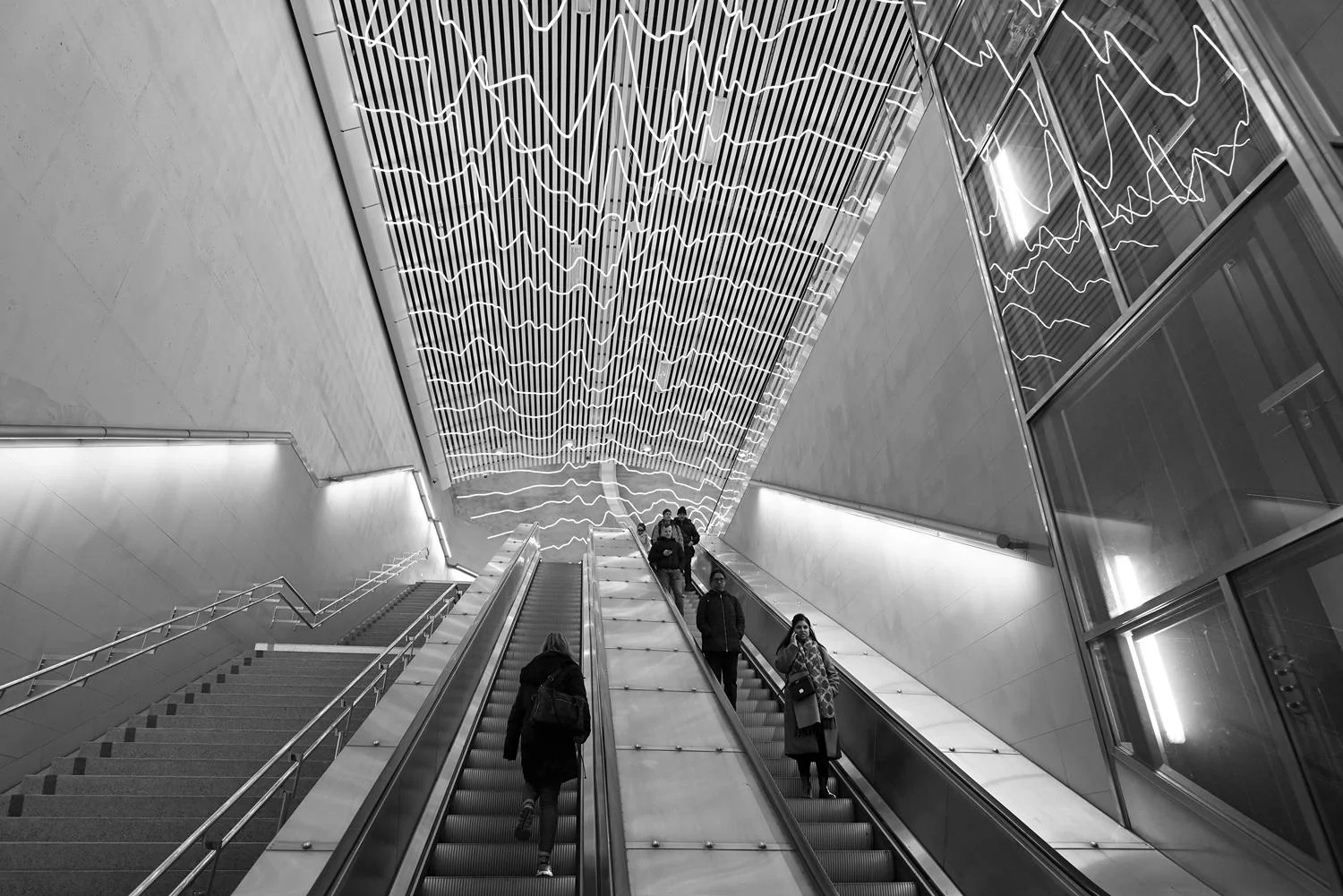
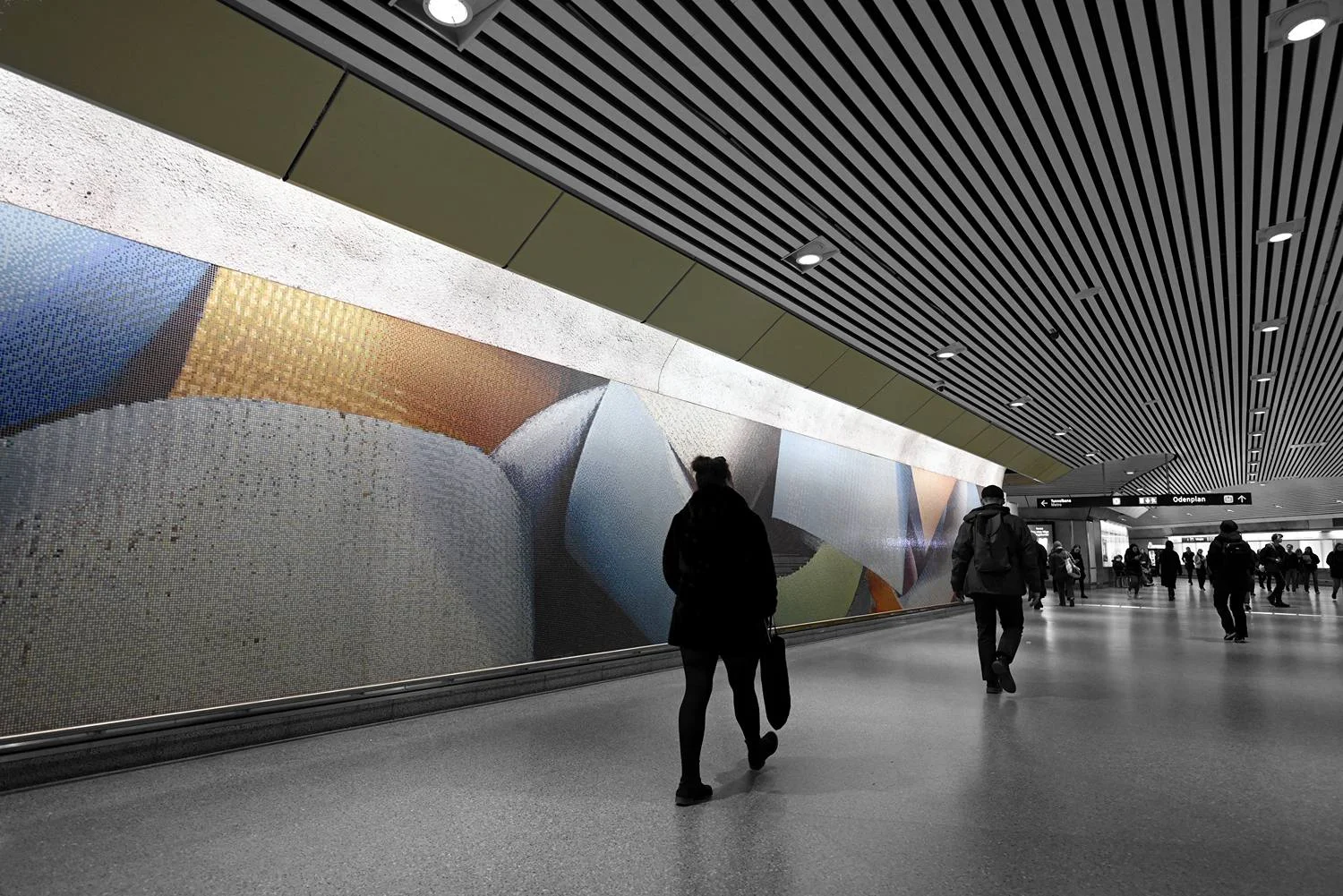
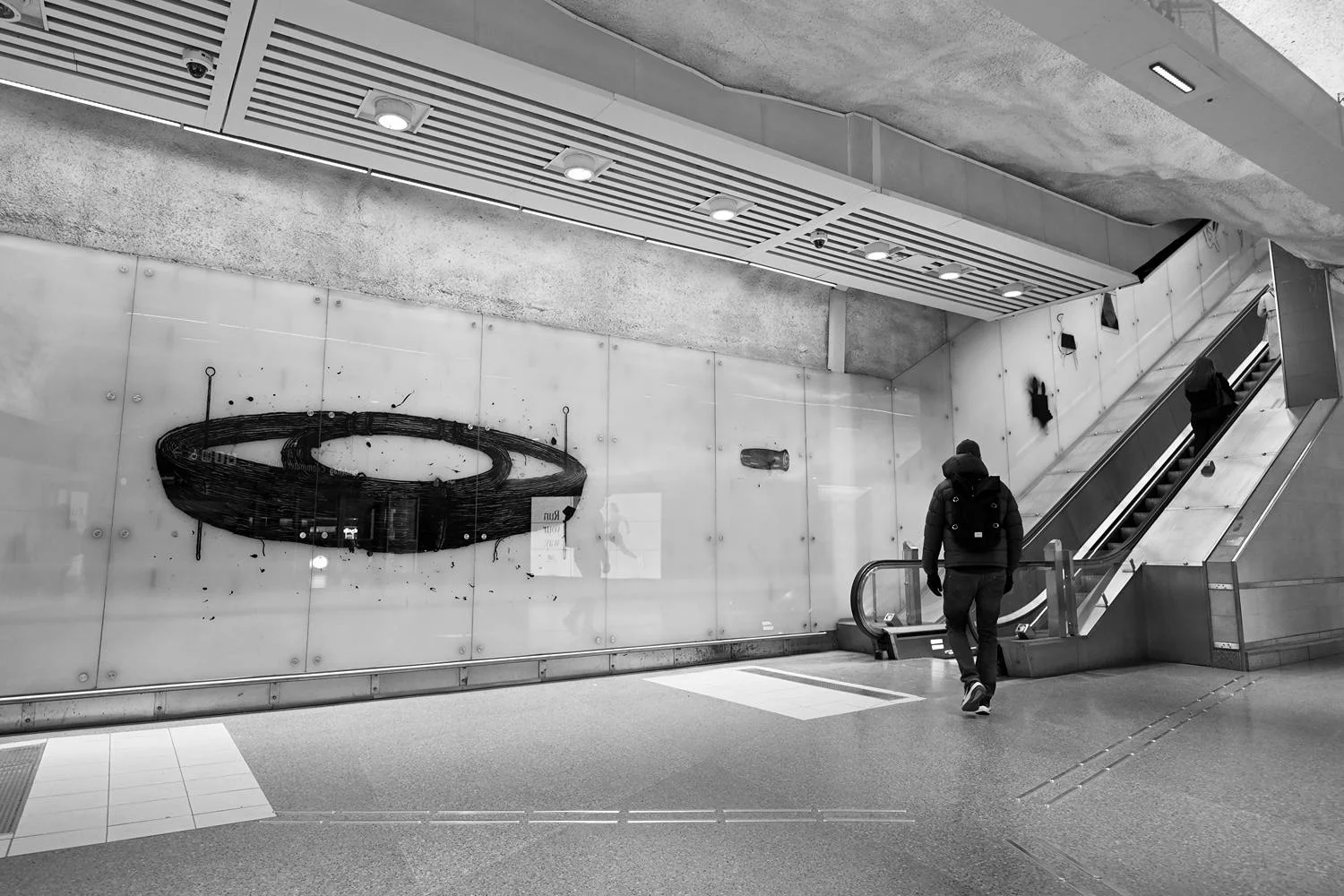
Odenplan, one of the prominent stations on the Stockholm metro, stands out as a fusion of art, history, and functionality. The design of this station has been the collaborative result of various artists over the years, each contributing to its unique aesthetic. Its walls are adorned with artworks that resonate with both local heritage and contemporary themes. From its intricate mosaic floors to the murals that depict scenes from Stockholm’s past and present, Odenplan serves as a testament to the city’s dedication to integrating art into everyday life. Every commuter passing through is treated to a visual narrative, reminding them of Stockholm’s rich cultural tapestry.
The Retro Appeal of Thorildsplan Station
Nestled within Stockholm’s vast metro system, Thorildsplan station on the green line offers a nostalgic trip down memory lane. Unique in its design, this station stands out with its 8-bit video game-inspired art. As passengers stroll through, they’re met with walls adorned with tiles that evoke imagery from classic video games of the past. From playful characters to iconic game elements, the vibrant mosaics transport commuters to a pixelated world, blending the charm of retro gaming with the rhythms of modern-day Stockholm
The Aquatic Allure of Fridhemsplan Station
Positioned near Stockholm’s shimmering waterways, Fridhemsplan station on both the green and blue lines delves deep into the aquatic theme. Drawing inspiration from the city’s intimate connection with water, the station boasts art and designs that pay homage to this elemental bond. Murals and installations depict scenes reminiscent of underwater landscapes, with shades of blue dominating the color palette. The fluidity of the designs gives commuters a sensation of traversing through an underwater realm, a serene escape from the urban bustle above. It’s a masterstroke in design, effortlessly blending the city’s maritime heritage with the modernity of metro travel.
Alvik, A Gem with a View
While the Alvik metro station might not boast the distinctive art pieces or unique designs that adorn other stations in Stockholm, it possesses something many might envy, a breathtaking view. Traveling between the Kristineberg and Alvik stations, passengers are graced with a picturesque vista over the Mälaren Bay and the cityscape, featuring districts such as Kungsholmen and Bromma. It’s a moment where one can momentarily forget the daily hustle and immerse oneself in the spectacular landscape of the Swedish capital. Alvik serves not only as a crucial transportation hub, connecting the green metro line with the Tvärbanan trams, but also as a window to some of the most beautiful views the Stockholm metro has to offer.
Hötorget, A Splash of Blue Beneath the Market Square
Heading back from Alvik on the green metro line towards the city center, the next stop to consider is Hötorget station. It stands out with its vibrant blue ceramic tiles, contrasting starkly with the exposed rocky sections that have been left untouched. This vivid design choice mirrors the lively atmosphere above ground. Located directly beneath Hötorget square, renowned for its daily fresh produce and flower market, the station is imbued with the energy of city life. In close proximity is the iconic Konserthuset, the concert hall where the Nobel Prize ceremonies are held annually. While Hötorget might not house large-scale artistic installations like some of its counterparts, its minimalist design combined with its significant location in the city’s cultural scene ensures it’s a memorable stop on any Stockholm metro journey.
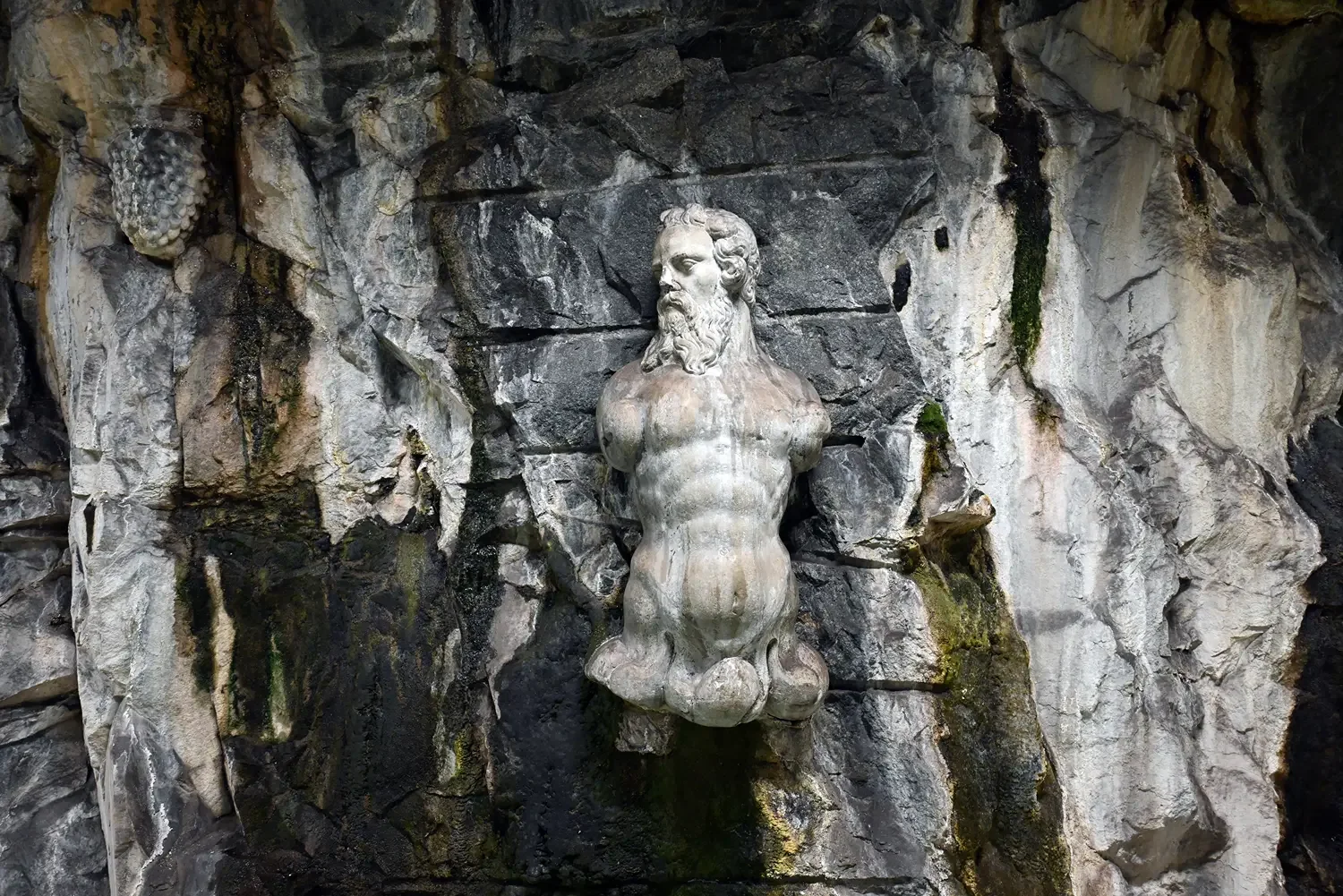
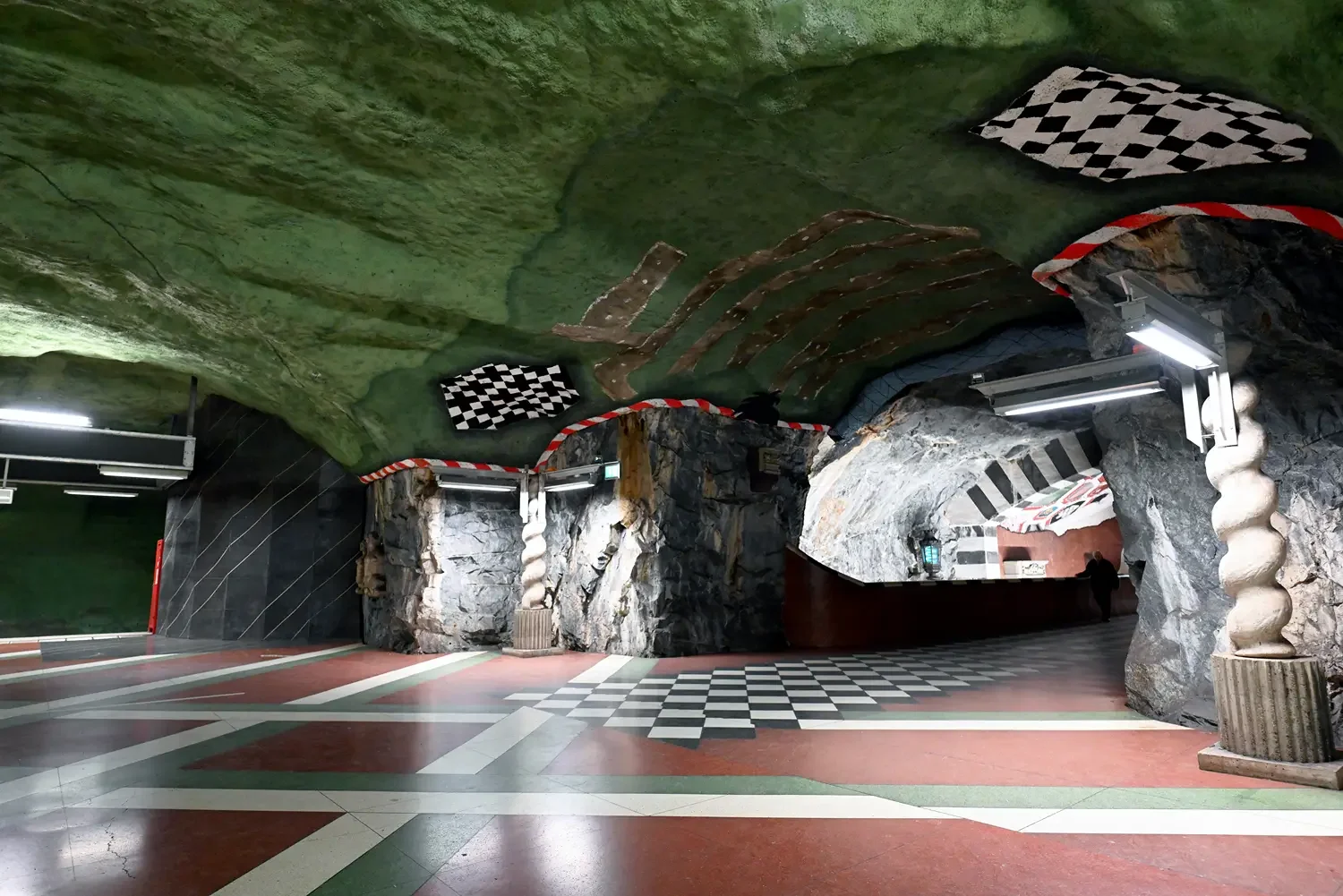
History Reimagined at Kungsträdgården
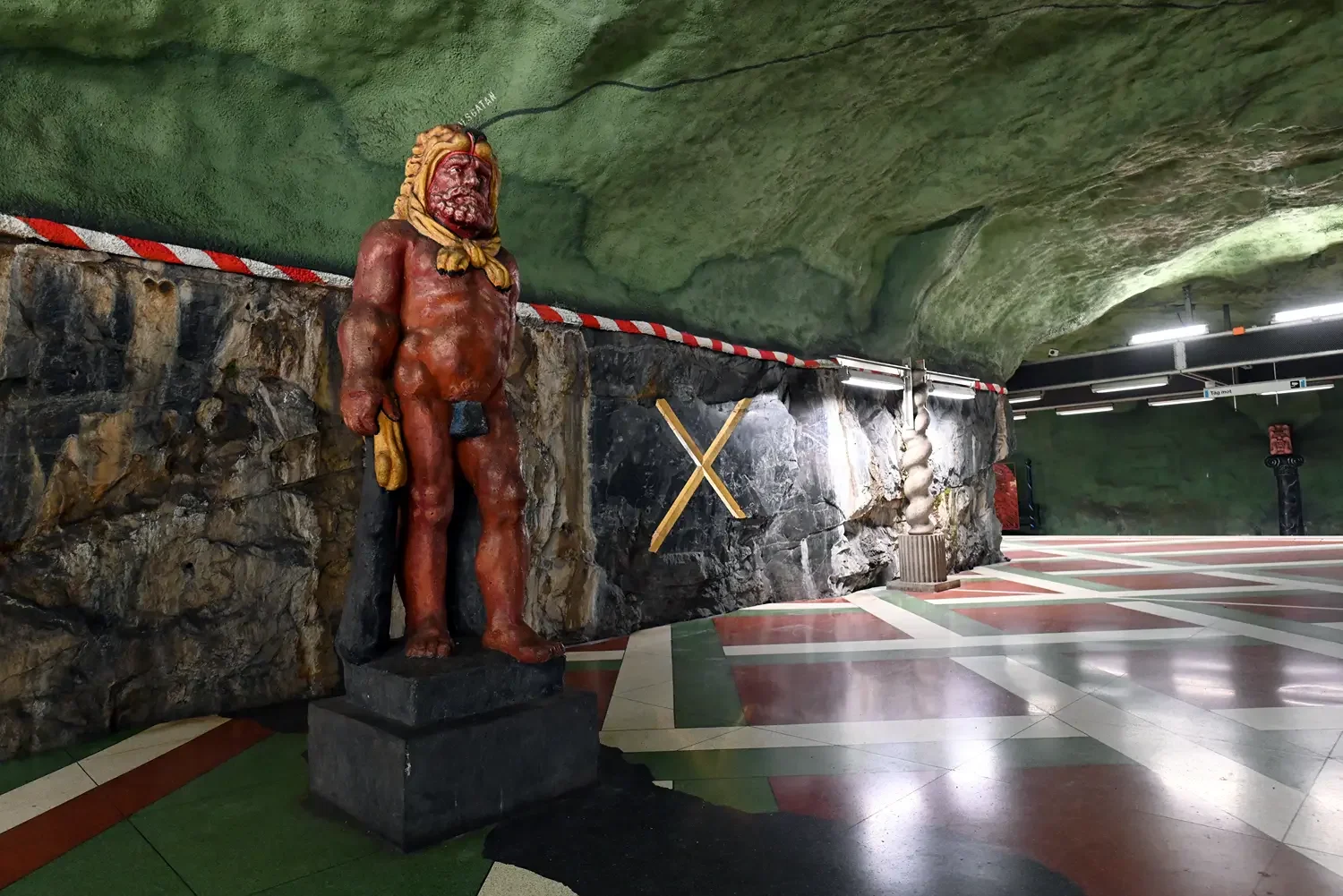
Designed by Ulrik Samuelson, Kungsträdgården Station takes passengers on a trip through the historical heart of Sweden. Archeological finds mesh with colorful rock formations, creating a unique ambiance that momentarily whisks you away from urban hustle.
The Lines That Tell Stories
Each of the subway lines in Stockholm’s metro system, whether it’s the red line, blue line, or green line, has its own tale to tell. These lines are not just mere modes of transport; they are the arteries of the city pulsating with life, color, and creativity. Dubbed the “world’s longest art gallery”, Stockholm’s subway art tour offers passengers a visual feast during their daily commutes. Each metro station, unique in design and atmosphere, becomes an integral part of the Stockholm subway narrative, contributing to the city’s reputation as a hub of innovative public art.
The Broad Network of Stockholm Metro
The vastness of Stockholm’s metro system extends beyond its geographical reach. It’s not just the art that impresses, but the intricate web that supports it. With numerous subway lines connecting different parts of the city, every subway station offers a distinct experience. Travelers and locals alike often embark on a Stockholm subway art tour, traversing the different lines and stations, making every commute a journey through art and history.

T-Centralen Stockholm. Photo: K. Mankiewicz
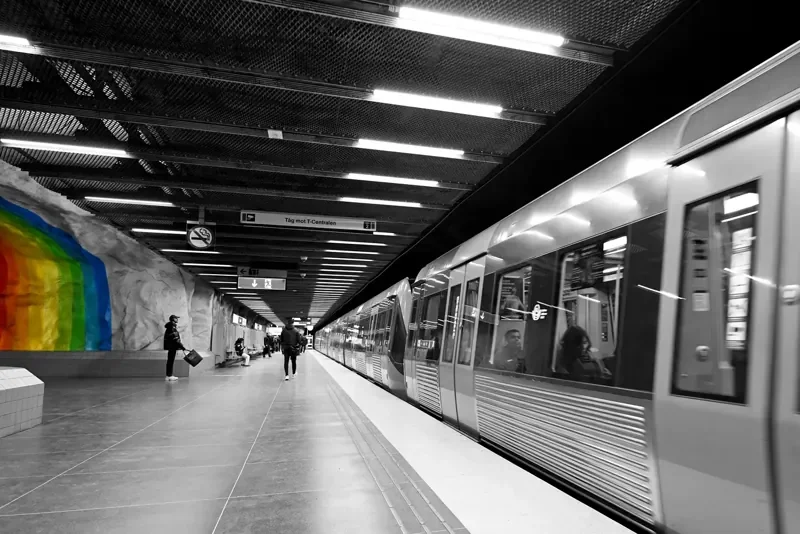
Stadion Metro Station. Photo: K. Mankiewicz
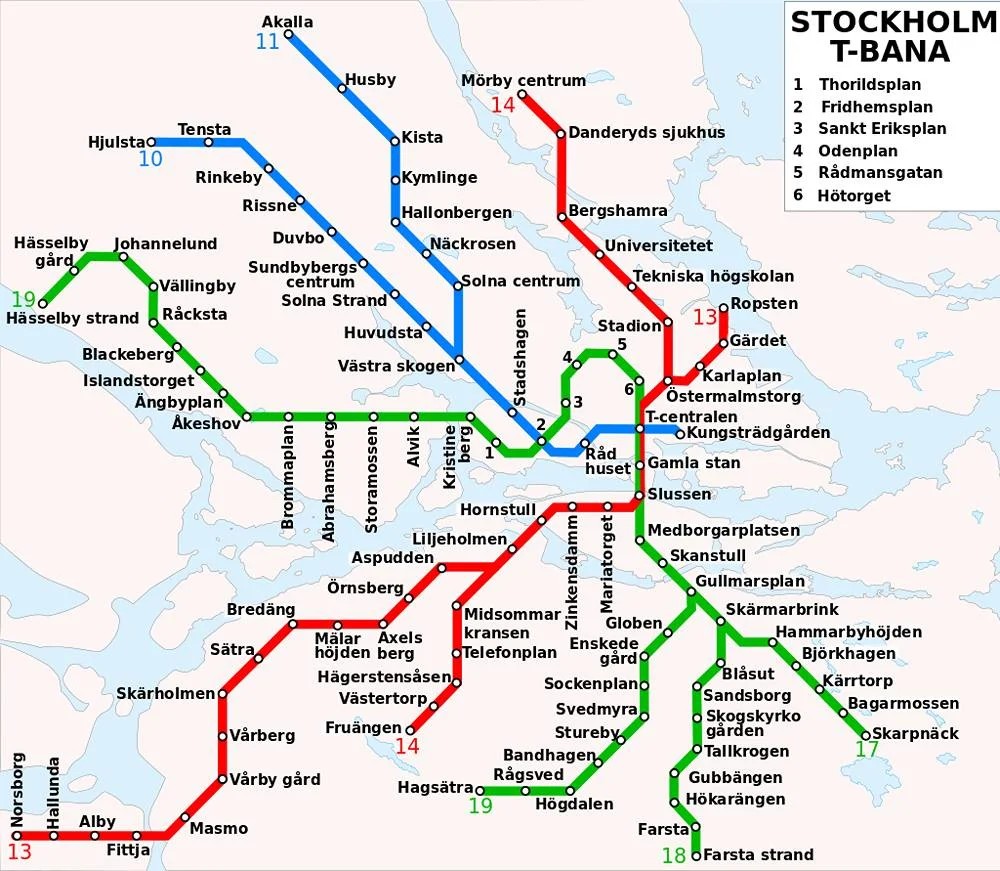
Stockholm Metro System. Credits: Wikipedia.org



Comment
Sonja Lund ·
You have done a fantastic documentary and so wunderfull photos. Next time I go with The Subway I Will look with your photos in mi d. Thanks you.